
Introduction
Trust and security are fundamental pillars of the global financial system. To maintain stability and protect investors, governments around the world establish financial regulatory organizations responsible for supervising financial markets, institutions, and investment services.
Thank you for reading this post, don't forget to subscribe!These authorities monitor financial activities, enforce regulations, and investigate misconduct to ensure that financial markets operate fairly and transparently. For investors, understanding the role of financial regulators is essential because dealing with unregulated or unauthorized companies significantly increases the risk of fraud and financial loss.
Why Financial Regulatory Organizations Are Important
Financial markets involve complex systems, large financial flows, and millions of participants. Without proper oversight, these markets could easily become vulnerable to fraud, manipulation, and instability.
Financial regulators perform several critical functions that help maintain a secure financial environment.
Preventing Financial Crises
Regulatory authorities monitor financial institutions and trading activities to identify risks that could threaten market stability. By enforcing compliance rules and conducting investigations, regulators help prevent systemic failures that could lead to economic downturns.
Protecting Consumers and Investors
Financial products and investment services can be complicated. Regulators protect consumers by ensuring that financial firms provide transparent information, follow fair practices, and operate within legal frameworks.
Promoting Transparency and Fair Markets
Regulatory bodies enforce disclosure requirements and compliance rules that ensure market participants operate with integrity. This transparency builds investor confidence and supports healthy market growth.
Encouraging Responsible Innovation
Financial regulators also support innovation within the financial sector. While encouraging new technologies and services, they ensure that emerging financial products do not expose investors to excessive risk.
Maintaining Financial Stability
By supervising banks, brokerages, trading platforms, and investment firms, regulators maintain the stability of financial markets and reduce the risk of large-scale financial disruptions.
Major Financial Regulatory Authorities Around the World
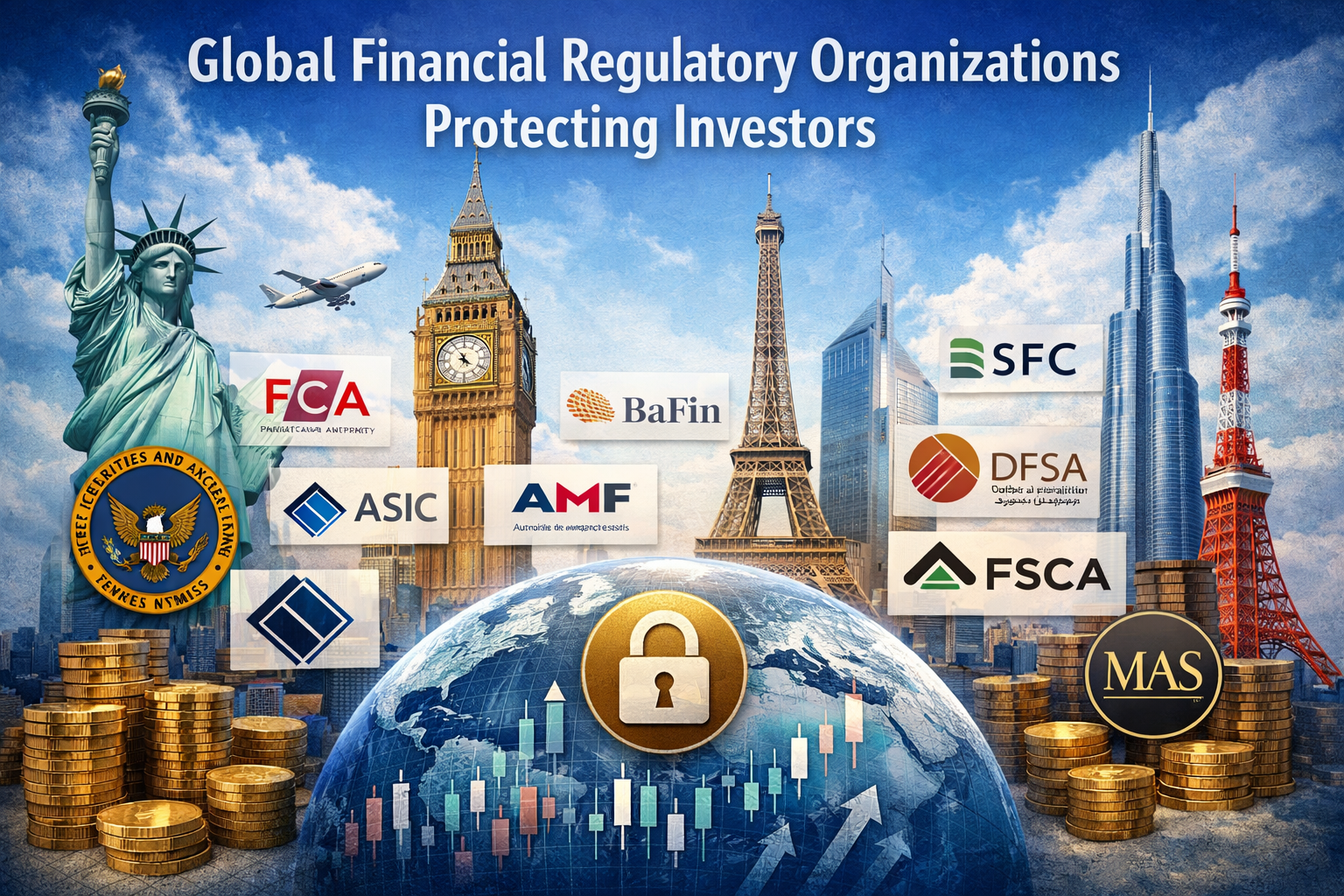
Many countries maintain dedicated regulatory agencies responsible for overseeing financial markets and protecting investors. Some of the most recognized global financial regulators include:
United States
- Securities and Exchange Commission (SEC)
- Commodity Futures Trading Commission (CFTC)
- Financial Industry Regulatory Authority (FINRA)
- National Futures Association (NFA)
- Federal Deposit Insurance Corporation (FDIC)
These organizations regulate securities markets, derivatives trading, brokerage firms, and banking institutions within the United States.
United Kingdom
- Financial Conduct Authority (FCA)
The FCA supervises financial services firms and protects consumers from financial misconduct and investment fraud.
Europe
Several European regulators oversee financial markets across different jurisdictions:
- Autorité des marchés financiers (AMF)
- BaFin
- Cyprus Securities and Exchange Commission
- Commission de Surveillance du Secteur Financier (CSSF)
These authorities supervise financial markets, investment firms, and banking activities within their respective countries.
Asia and the Middle East
Important financial regulators operating in these regions include:
- Monetary Authority of Singapore (MAS)
- Financial Services Agency (FSA)
- Dubai Financial Services Authority (DFSA)
- Securities and Futures Commission (SFC)
These organizations regulate financial institutions, capital markets, and trading platforms within their jurisdictions.
Other Notable Global Regulators
Additional financial authorities operating internationally include:
- Australian Securities and Investments Commission (ASIC)
- Financial Sector Conduct Authority (FSCA)
- Capital Markets Board of Turkey (CMB)
- National Securities and Stock Market Commission (NSSMC)
These organizations enforce regulations designed to maintain fair and transparent financial markets.
Why Investors Should Verify Regulation
Many online investment platforms claim to offer profitable opportunities in forex trading, cryptocurrency investments, or derivatives markets. However, fraudulent brokers often operate without authorization from any financial regulator.
Before investing, individuals should always verify whether a company is registered with a recognized financial authority such as the:
- Financial Conduct Authority
- Securities and Exchange Commission
- Autorité des marchés financiers
If a company is not listed in an official regulatory database, investors should treat it as a potential high-risk or unauthorized operation.
Conclusion
Financial regulatory organizations play a critical role in protecting investors and maintaining the stability of global financial markets. By enforcing regulations, supervising financial institutions, and investigating misconduct, these authorities help ensure that financial markets operate fairly and transparently.
Investors should always verify the regulatory status of any financial platform before sending funds. Dealing with unregulated brokers or investment schemes significantly increases the risk of fraud and financial loss.
Staying informed about financial regulators and their responsibilities can help investors make safer decisions and avoid falling victim to investment scams.
Read about CMW Operations LLC, XTP-Solution Review, Crypto Scams, Social media scams and others.
Check out more about similar broker GTC Global Trade Capital Review to understand how such practices affect traders.