
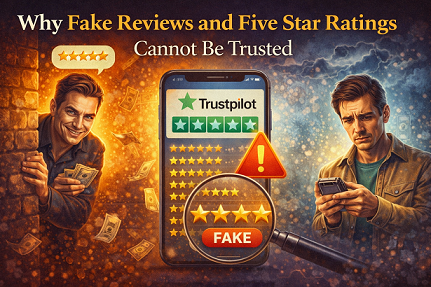
The Illusion of a Perfect Reputation
Before depositing a single penny into any investment platform, most investors do what feels sensible — they check the reviews. A wall of five star ratings and glowing testimonials feels reassuring. It signals that other people have used the platform, made money, and walked away happy.
Thank you for reading this post, don't forget to subscribe!The problem is that in the world of forex brokers, crypto exchanges, and online investment platforms, that wall of five star reviews is very often completely fabricated. Scam brokers have turned fake reviews into a sophisticated tool — one specifically designed to lower your guard and empty your account.
How Scam Brokers Manufacture Five Star Ratings
The operators behind fraudulent investment platforms understand one thing very clearly — most investors trust reviews more than they trust anything else. That makes fake reviews one of the most valuable weapons in a scammer’s arsenal.
Here is exactly how they do it:
- Paid review farms — Scam brokers pay organised networks of fake reviewers to flood platforms like Trustpilot, Google Reviews, and app stores with five star ratings and convincing testimonials
- Employee and affiliate reviews — The people running the platform and their affiliates post glowing reviews themselves using fake identities and newly created accounts
- Incentivised reviews — Real users are offered bonuses, fee waivers, or account credits in exchange for posting positive reviews before they ever attempt a withdrawal
- Suppressing negative reviews — Scam brokers aggressively report genuine negative reviews as fake, spam, or defamatory to have them removed from platforms
- Flooding with positives — When genuine negative reviews do appear the platform responds by flooding the same review site with a wave of new five star ratings to bury them
Why Review Platforms Cannot Always Protect You
Review platforms like Trustpilot, Google, and app stores work hard to detect and remove fake reviews. But the people running investment scams are equally determined to stay ahead of those detection systems.
Fake review operations use different devices, different IP addresses, different email accounts, and different writing styles to avoid triggering automated fraud detection. By the time a platform identifies and removes a batch of fake reviews the scam broker has already deposited another wave.
The result is that a genuinely fraudulent platform can maintain an impressive public rating for months — long enough to deceive thousands of investors.
The Warning Signs of Fake Reviews
Learning to spot fake reviews is a skill that could save your entire investment. Here are the most common signs that a broker’s ratings cannot be trusted:
- A large number of five star reviews posted within a very short time period
- Reviews that are vague, generic, and interchangeable — no specific details about trades, platforms, or experiences
- Reviewer accounts that were created recently and have only ever reviewed this one platform
- Reviews that praise the platform in unusually formal or marketing style language
- A suspicious gap between the five star ratings and the overall written feedback — positive stars but negative comments
- Negative reviews that all receive the same copy and pasted response from the platform
- A sudden flood of five star reviews immediately after a wave of negative ones
- Reviews that mention bonuses or promotions — a sign the reviewer was incentivised to post
What Real Victims Say About Fake Reviews
The pattern appears consistently across platforms that Brokers Reporter has investigated. Victims describe depositing funds after reading impressive reviews, only to discover the experience described in those reviews bore no resemblance to reality.
One victim described the five star rating on their broker’s Trustpilot page as a deliberate trap — the positive reviews all appeared within weeks of the platform launching and every single one used almost identical language. Another noted that when they posted their own genuine negative review the platform immediately reported it and had it taken down within days.
A third victim pointed out something even more revealing — after their funds were frozen and they left a one star review, five new five star reviews appeared on the same platform within 48 hours. The timing was not a coincidence.
Where Scam Brokers Post Fake Reviews
Fraudulent platforms target the review sites investors trust most:
| Platform | Why Scammers Target It |
|---|---|
| Trustpilot | High trust reputation and strong Google visibility |
| Google Reviews | Appears directly in search results alongside the broker |
| App Store / Google Play | High star ratings drive downloads and deposits |
| Facebook Recommendations | Social proof from apparent real people carries weight |
| Forums and Reddit | Planted posts appear organic and community driven |
| YouTube | Paid testimonial videos appear as genuine user experiences |
How to Research a Broker Beyond the Reviews
Five star ratings should never be your primary source of due diligence. Here is how to research any broker properly:
- Check the regulator directly — Visit the official website of the FCA, SEC, CNMV, AMF, or the relevant authority in your country and search for the broker by name
- Look for the negative reviews — Filter specifically for one and two star reviews. Read them carefully. Look for patterns — blocked withdrawals, frozen accounts, and ignored support tickets are consistent signs of a scam operation
- Check the review dates — A sudden spike in five star reviews within a short window is a major red flag
- Search the broker name alongside the word scam — The results will tell you immediately what real victims are saying outside of the broker’s own review page
- Check Brokers Reporter and other scam warning sites — Regulatory warning lists and independent investigation sites document flagged brokers that review platforms may not have caught yet
- Look at the reviewer profiles — On Trustpilot and Google you can click individual reviewer accounts. Newly created accounts with only one review are a clear sign of a fake
The Role of Social Media in Fake Credibility
Beyond review platforms scam brokers also manufacture credibility through social media. Fake Instagram accounts show screenshots of profits. Fake YouTube channels post testimonial videos from paid actors. Telegram groups are filled with planted success stories designed to make new victims feel like they are joining a community of winners.
The people running these operations understand human psychology. Seeing others succeed — even if those others are entirely fictional — triggers a powerful fear of missing out that overrides rational caution.
Red Flags to Watch Out For
- Glowing reviews that contain no specific or verifiable details
- Review platforms showing a near perfect rating with very few reviews in the middle range
- Social media accounts showing profit screenshots with no verifiable trading history
- Testimonial videos that feel scripted or use suspiciously similar language across different accounts
- A platform that aggressively promotes its own reviews and ratings in its marketing materials
- Negative reviews that disappear shortly after being posted
Final Verdict – Never Trust Reviews Alone
Five star ratings and glowing testimonials feel like social proof. In the investment world they are often nothing more than a carefully constructed trap. The most dangerous scam brokers are not the ones with no reviews — they are the ones with hundreds of convincing fake ones.
Every investor owes it to themselves to go beyond the review page. Check the regulator. Read the negative feedback. Search for independent warnings. The two minutes it takes to verify a broker’s authorisation status could save everything.
⚠️ A five star rating means nothing if the regulator has never heard of the broker. Always verify before you invest.
Frequently Asked Questions
Can I Trust Trustpilot Reviews for Brokers?
Trustpilot works hard to remove fake reviews but scam brokers invest heavily in defeating those detection systems. Always use Trustpilot as one source among many — never as your only source of due diligence.
How Do I Spot a Fake Review?
Look for vague generic language, newly created reviewer accounts, a sudden spike in five star ratings within a short time period, and reviews that sound more like marketing copy than genuine personal experiences.
What Should I Do If I Suspect a Broker Is Using Fake Reviews?
Report the suspicious reviews directly to the review platform. Then verify the broker’s regulatory status with the relevant financial authority in your country. If the broker does not appear in the regulator’s database stop all communication immediately.
Why Do Scam Brokers Invest So Much in Fake Reviews?
Because they work. Reviews are one of the most trusted signals investors use when choosing a platform. A convincing public reputation lowers investor caution and increases deposits — which is exactly what scam brokers need before they block withdrawals and disappear.
How Do I Report ? Report to Brokersreporter.com and to the financial regulator in your own country. Contact your bank immediately to dispute any transactions made to this platform.
Read about Identifying and Avoiding Fake Dating Sites in 2026, Bulhills / PremiumIndexOptions, Crypto Scams, Social media scams and others.
Check out more about similar broker Swiss Metropolitan Bank to understand how such practices affect traders.