
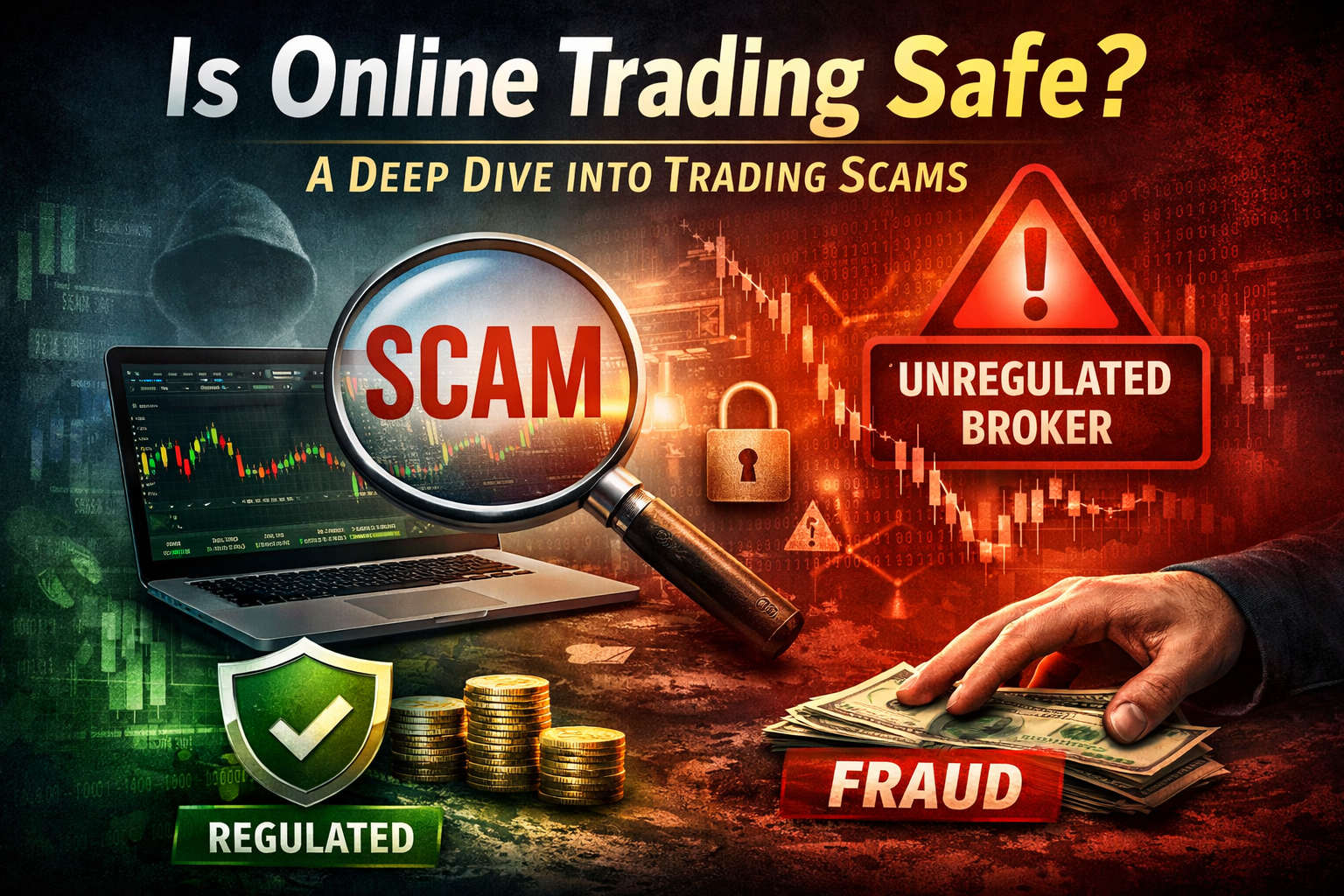
Is Online Trading Safe?
Online trading gives investors easy access to global markets, but it also enables widespread trading scams. Legitimate brokers operate in this space, yet the rapid growth of unregulated platforms has made online trading increasingly risky for everyday investors.
Thank you for reading this post, don't forget to subscribe!The real question is not whether online trading exists, but whether you can trust the platform you choose to trade with.
A Deep Dive into Trading Scams
Scammers design trading platforms to look professional, convincing, and profitable. Many scam platforms copy the appearance of regulated brokers, using fake licenses, manipulated trading software, and aggressive sales tactics.
Based on investigations and warnings covered on this blog, most trading scams follow a similar pattern:
- Initial small profits shown on the platform
- Pressure to deposit larger amounts
- Claims of “account upgrades” or “VIP trading”
- Withdrawal requests delayed or rejected
- Additional fees demanded to release funds
Once the victim stops sending money, communication often ends.
Why Unregulated Brokers Are the Biggest Risk
One of the strongest indicators of a trading scam is lack of regulation.
Unregulated brokers:
- Are not supervised by any financial authority
- Can manipulate prices and account balances
- Are not required to protect client funds
- Can disappear without legal consequences
Many of the platforms reviewed on this website appear on official regulator warning lists, confirming that operating without authorization remains a major threat to investors.
Common Online Trading Scam Types
Forex & CFD Trading Scams
These brokers run simulated platforms while falsely claiming to offer forex or CFD trading, and they never execute trades in real markets.
Crypto Trading Scams
Crypto-focused scams often promise high daily returns, using market hype to attract inexperienced investors.
Social Media Investment Scams
Scammers use Facebook, Instagram, WhatsApp, and Telegram to lure victims with fake success stories and “expert” trading signals.
Clone Broker Scams
Fraudsters impersonate regulated brokers by copying license numbers, brand names, and websites.
Warning Signs You Should Never Ignore
If you notice any of the following, online trading is not safe:
- Guaranteed or fixed profits
- No verifiable regulation
- High-pressure sales tactics
- Requests for upfront “withdrawal fees”
- Lack of transparency about company ownership
These red flags appear repeatedly in confirmed trading scam cases.
Can Online Trading Ever Be Safe?
Online trading can be relatively safe only when strict conditions are met:
- The broker is licensed by a reputable regulator
- Company details are fully disclosed
- Client funds are segregated
- Withdrawal processes are transparent
Without regulation, there is no investor protection.
Final Verdict
So, is online trading safe?
Online trading operates legally around the world, but unregulated brokers and investment scams now flood the internet. Investors face their greatest risk not from market volatility, but from fraudulent platforms that deliberately seize deposits and block withdrawals.
Staying safe requires research, skepticism, and avoiding any broker that lacks proper authorization.
If you suspect you’ve lost funds to Core Signals or a similar platform, Brokers Reporter offers:
Support in navigating regulatory and legal options
Expert guidance for recovering funds
Contact us now and take the first step toward reclaiming your financial security.
Help documenting evidence and communications
For updates and discussions, follow us on: