
Opportunities, Risks, and How Scammers Exploit the Market
Forex trading, also known as foreign exchange trading, is one of the largest and most liquid financial markets in the world. Every day, trillions of dollars are exchanged as traders buy and sell currencies from different countries. While forex trading can offer genuine opportunities, it also carries significant risks—especially when exploited by dishonest platforms and scammers.
Thank you for reading this post, don't forget to subscribe!This guide explains how forex trading works, its potential benefits and drawbacks, and the common ways scammers misuse forex to deceive investors.
What Is Forex Trading?
Forex trading involves exchanging one currency for another, such as EUR/USD, GBP/USD, or USD/JPY. Traders aim to profit from changes in exchange rates driven by economic data, interest rates, geopolitical events, and market sentiment.
Forex markets operate 24 hours a day, five days a week, allowing traders to participate across global sessions including London, New York, Tokyo, and Sydney.
The Legitimate Benefits of Forex Trading
When done through a properly regulated broker, forex trading can offer several advantages:
High Liquidity
Forex markets are extremely liquid, meaning trades can usually be executed quickly without major price manipulation.
Market Accessibility
Retail traders can access forex markets with relatively small capital compared to traditional investments.
Potential for Profit in Rising or Falling Markets
Forex allows traders to profit from both upward and downward price movements through buying or selling currency pairs.
Availability of Educational Tools
Reputable brokers often provide demo accounts, educational materials, and risk management tools to help traders learn responsibly.
The Real Risks of Forex Trading
Despite its appeal, forex trading is not suitable for everyone.
High Volatility
Currency prices can move rapidly due to economic announcements or global events, leading to sudden losses.
Leverage Risk
Leverage allows traders to control large positions with small capital, but it also magnifies losses. Many retail traders lose money due to excessive leverage.
Emotional Trading
Fear and greed often lead to poor decision-making, especially for inexperienced traders.
Lack of Regulation in Some Regions
Unregulated brokers may operate without oversight, putting investor funds at serious risk.
How Scammers Use Forex Trading to Defraud Investors
Forex trading has become a popular cover for scams due to its complexity and global nature.
Fake Forex Brokers
Scammers create professional-looking websites that claim to offer forex trading but are not licensed or regulated. Once deposits are made, withdrawals may be delayed, blocked, or denied entirely.
Guaranteed Profit Promises
No legitimate forex trader can guarantee profits. Claims of “risk-free trading” or “100% win rates” are major red flags.
Signal Groups and Trading Bots
Some scammers promote fake signal services or automated bots that promise consistent profits. Results are often manipulated or completely fabricated.
Social Media and Messaging Apps
WhatsApp, Telegram, Instagram, and Facebook are commonly used to approach victims with “exclusive trading opportunities” or fake testimonials.
Account Manipulation
Victims may see fake profits on a dashboard, only to be told they must pay additional fees or taxes before withdrawals—funds that are never returned.
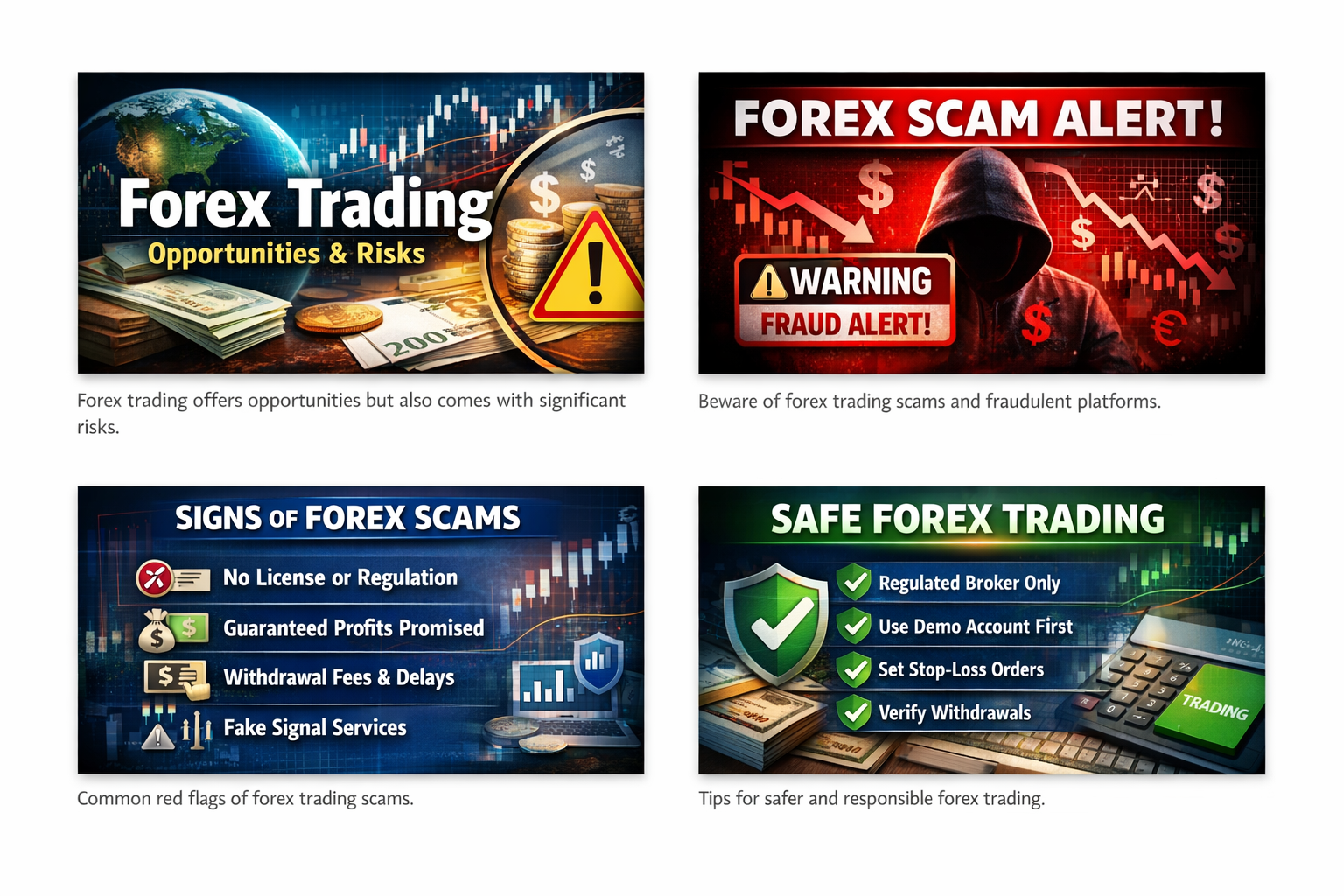
Common Red Flags in Forex Scams
- No verifiable regulatory license
- Pressure to deposit funds quickly
- Requests for “release fees” or “withdrawal taxes”
- Lack of transparent company information
- Fake customer support or unreachable contacts
- Use of celebrities or influencers without proof
How to Trade Forex More Safely
If you are considering forex trading, risk awareness is essential.
- Always verify broker registration with official regulators
- Avoid platforms promising guaranteed returns
- Start with a demo account before risking real money
- Use proper risk management, including stop-loss orders
- Never share wallet access or personal documents with unverified platforms
What to Do If You’ve Been Affected
If you suspect fraud or have lost money:
- Stop all further payments immediately
- Gather transaction records, emails, and screenshots
- Report the incident to your financial authority
- Seek independent advice before taking recovery offers
Final Thoughts
Forex trading itself is not a scam—it is a legitimate global market used by banks, institutions, and individual traders. However, its popularity and complexity make it an attractive tool for fraudsters.
Understanding how forex works, recognizing warning signs, and choosing regulated platforms are critical steps in protecting your capital. Informed traders are far less likely to fall victim to deceptive schemes.
Want to check whether a broker is trustworthy before you invest?
If you are seeking a verified source of information, analysis, and safe trading options on BrokersReporter.com, please visit us.
For more verified facts, scam reviews, and detailed guides on how to select a safe forex broker, visit us for comprehensive forex-related content and keep your investments secure.